Thursday, December 19, 2019

When You’re Ready for a Change, Don’t Hesitate

This is the last Copyblogger Weekly of the year — and the decade! And actually, it’s the last Copyblogger Weekly...

The post When You’re Ready for a Change, Don’t Hesitate appeared first on Copyblogger.


from Copyblogger https://ift.tt/2PFhmn4
via IFTTT

Wednesday, December 18, 2019

How to Grow Your Email List

Grow email listNever underestimate the value of an email. Email marketing has proven itself again and again to be the one marketing avenue that consistently brings in the highest conversions for companies all over the world.

There is a reason they are always pushing to get customer email addresses.

No matter the size of your enterprise, you can benefit from building an email marketing list. The faster you do it, the sooner you will start seeing the results.

Marketing emails mean click-through traffic, greater sales, brand visibility, and direct customer engagement. Even social media doesn’t manage to bring in the ROI of emails.

Consider some email marketing stats:

  • 40% of B2B marketers say email newsletters are most critical to their content marketing success (source).
  • 80% of retail professionals in the US said email marketing drives customer acquisition and retention
  • On average, companies are attributing 23% of their total sales to the email marketing channel, compared to 18% in 2013. This equates to a proportionate rise of 28% in just one year.

email marketing stats

Did you know? Companies are attributing 23% of their total sales to the email marketing channelClick To Tweet

Not only is that a significant increase for such a short period of time, but it proves that those who claim email is dead are dead wrong. It is a more powerful tool than ever.

There are many different ways that will help you rapidly build up an email list. These are some of the most effective.

1. Build An Effective Landing Page


If you have a website or product launching, you can create a simple landing page to begin building hype. Get customers early by putting up an email form for people to be alerted the moment you launch, and so be the first to know.

Services like LeadPages exist to help you do this more quickly. You could have a page up in minutes, and begin gathering those sign ups as soon as it is live.
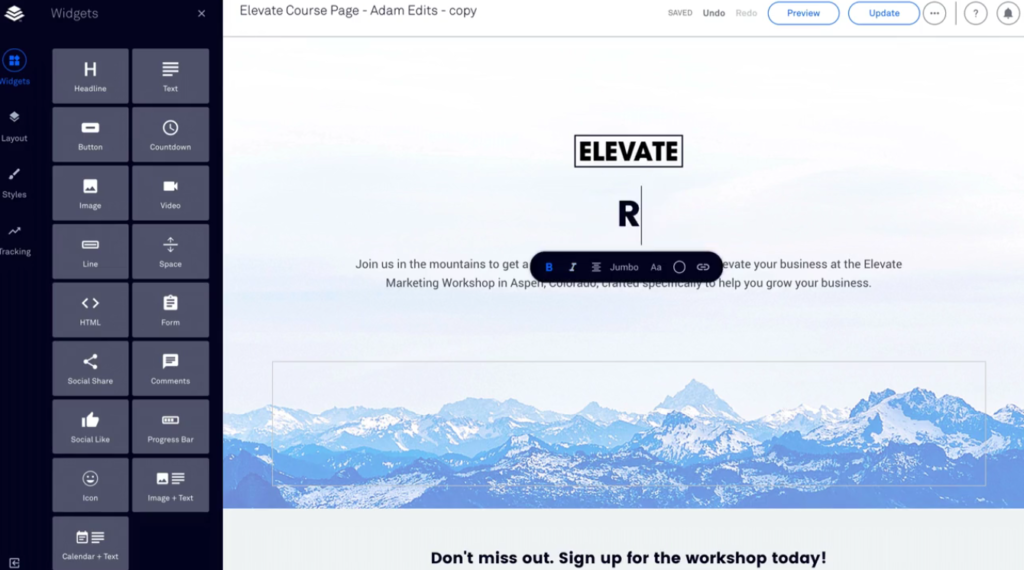
The most important thing about a landing page many businesses miss: It should be fast! I can’t believe how many leads are lost just because the page doesn’t load.

2. Personalize Your Landing Page


3. Host A Webinar


Webinars are becoming more popular by the day, and it is no wonder. They give people all the benefits of going to a conference lecture without ever having to leave their home. It is convenient and a lot cheaper without the hotel and airfare.

Host a live webinar, and then put the recording on your website for people to see in their own time. Not only is this a great content strategy, but it gives you an opportunity to create a sign up form that includes both email addresses and other important data.

Tools like GoToMeeting and ClickMeeting makes it very easy to host, customize, record and invite people to webinars:

webinar

A single webinar can bring in thousands of emails.

4. Offer Premium Content


Let’s say you are reading this post, and you want more information. You get to the end and you find out there is a much more thorough, instructive version available. All you have to do is provide your email, then follow the confirmation link to this premium content.

This is another great strategy for both content marketing and email acquisition. Usually referred to as content upgrading, it is guaranteed to get your reader’s attention, and their info.

Check out IMN Marketing Resources page for a solid example of premium content we are offering:

Marketing Resources

4. Offer Emailed Incentives


When Google first released Google Plus, they took a handful of invites and gave them to early adopters as they anticipated the launch. Then those users gave out invites to their friends that wanted to try it.

The sheer number of invites that were sent out this way was incredible, and all done through email. It created a powerful force that made the G+ launch a busy and highly anticipated one. While they were not able to engage those users well enough to sustain the growth, it has worked very well for creating the initial buzz.

Offer users the ability to send special offers to their friends if they provide their email. The friend gets the offer, then provides their own email address, and passes it on.

Mailshake is a great tool to help creating that initial buzz. You can use it to reach out to niche influencers and invite them to your platform. Mailshake handles emailing and following-up and gives you a nice dashboard to monitor your progress:

Mailshake

5. Publish eBooks

eBooks are a great way to spread your content, increase authority, and gain traction in your marketing campaign. Offer your ebooks free for an email signup, and you will see your email marketing list grow very quickly.

Just make sure you are creating valuable and well written ebooks. Don’t sacrifice quality for a quick product that only exist to build your marketing list. That should be a plus, not the singular goal.

Conclusion

Building an email list is important, and will lead to greater conversions than any other method available. These are some of the most effective ways of gathering them. The sooner you put them into practice, the sooner you will start reaping the benefits.

The post How to Grow Your Email List appeared first on Internet Marketing Ninjas Blog.


from Internet Marketing Ninjas Blog https://ift.tt/2r5Hzlb
via IFTTT

What’s the One Skill that Separates Well-Paid Freelance Writers from Those Who Struggle?

Everyone loves the part of the hero’s journey where our protagonist accepts the “call to adventure” and “crosses the threshold”...

The post What’s the One Skill that Separates Well-Paid Freelance Writers from Those Who Struggle? appeared first on Copyblogger.


from Copyblogger https://ift.tt/2x29TDR
via IFTTT

Tuesday, December 17, 2019

Why the Best Writers (Sometimes) Aren’t Paid What They’re Worth

Maybe you don’t say it out loud. It sounds like bragging, and bragging is obnoxious. But you know you’re good....

The post Why the Best Writers (Sometimes) Aren’t Paid What They’re Worth appeared first on Copyblogger.


from Copyblogger https://ift.tt/35vP8Ar
via IFTTT

Monday, December 16, 2019

Thought Leadership Is a Synonym for Attention

Personally, I’ve never liked the term “thought leadership.” It signifies some exalted guru status, and my 20 years of online...

The post Thought Leadership Is a Synonym for Attention appeared first on Copyblogger.


from Copyblogger https://ift.tt/2sAyOQc
via IFTTT

Thursday, December 12, 2019

The Ultimate Guide to Proper Youtube Video Tagging

According to YouTube, tagging is one of the most important ways to rank your video in YouTube search results:

Tags help users find your video when they search the site. When users type keywords related to your tags your video will appear in their search results.

YouTube does consider user engagement as well (like number of views, views in common and user “retention”) but tagging is the *first* step to ranking your video in YouTube search results (and thus getting a good chance to get ranked in Universal Results as well).

A most scientific (but still useful to start brainstorming) approach to classifying YouTube tags (pdf) groups all the tags as follows:

  1. Generic relationship between tag and video content:
    1. Tag identifies what the video is of at its most primary and objective level – no subject specific knowledge is needed to make this distinction (e.g. a video of a cat, tagged as ‘cat’ or ‘animal’)
    2. General YouTube defined Category or Genre (e.g. Comedy, Entertainment, Music)
  2. Specific relationship between tag and video content:
    1. Tag identifies what video is of. Familiarity or some existing knowledge is needed to make this connection (this may be about names, locations, venues, etc).
  3. Tag only useful to a minority of users, specific individual or group
    1. Refining tag (Tag which cannot stand alone – only useful when looked at as part of the larger tag set (e.g., episodes of a series of videos specified by a number)
    2. Self-reference tagging (e.g. “my dog”),
  4. Irrelevant/Non Useful Tags (those may vary from attention-grabbing and misspelled tags to conjunctions and prepositions).

Obviously, the top three classes of tags should all be considered for ranking for various types of search queries  (navigational search queries, generic search, category search, etc).


Brainstorming the Tags

Most YouTube pros suggest including as many relevant tags as you can (of course, that doesn’t mean you need hundreds of them but dropping the dozen of most essential ones is very important for your rankings). YouTube doesn’t restrict the number of tags as well which is good sign.

I do agree that we need to use quite a few tags, but the focus is on “smart” or “educated” tagging:

1) Include Your Brand-Specific Tags

This one comes first because it’s so often neglected!

  • You *want* to rank for your own brand name in YouTube search results;
  • You do want your own videos to appear in Google’s universal results!

So what you never want to forget is to “self-reference” your video:

  • With your own name (the one the world knows you by);
  • Your brand name: preferably in a couple of variations, like: [brand name], [brandname] and [brandname.com]

2) Use YouTube Auto-Suggest

What you do next is playing with YouTube search results a bit. Two things we want to do here:

  • See what YouTube suggests typing in when searching (you want to rank for all of those words);
  • Identifying a few videos that tend to pop up now and then for important search queries (especially in default “by Relevance” tab)

So what you are going to do next is trying a few random keyword-based searches in a row taking a note of the two things I’ve mentioned above:

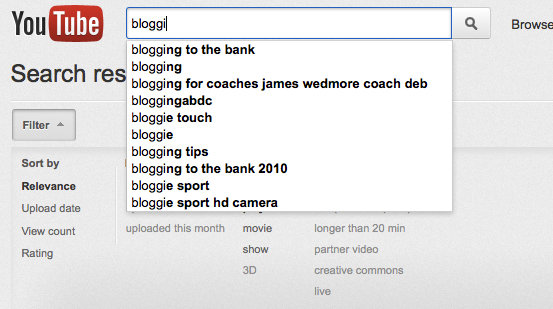
Youtube Auto-suggest

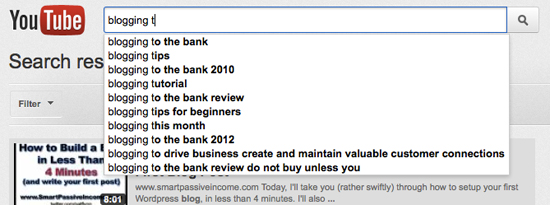
Gotta love Auto-Suggest: each new letter you add brings up more and more suggestions:

Youtube Auto-Suggest

3) Use YouTube Tool

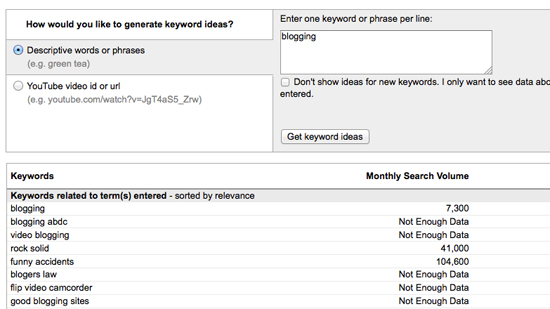
The aforementioned YouTube keyword suggestion tool can be used to both extract keywords from your competitors’ videos and to generate suggestions based on your core term (just like Google’s Adsense external tool), so you may want to play further for even more bright ideas:

youtube-tagging-01


Adding the Tags

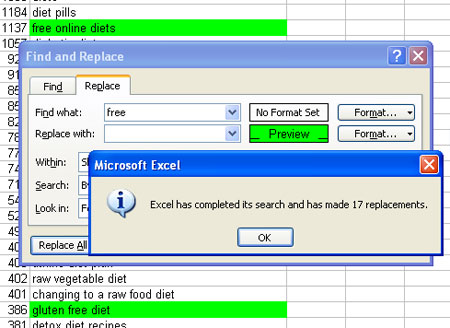
Now that you have thoroughly collected all the relevant tags, throw them into an Excel spreadsheet and use all sorts of sorting and conditional formatting to identify your best “core” words you want to include into your tags.

For example, you can use “Find and Replace” feature to highlight all the cells that have “free” in yellow (read more about organizing your keyword modifiers <- “oldie but goodie”):

Youtube tagging

Again, while you are free to play with the above tools to generate lots of keyword ideas, the main point of this step is to identify your most important core terms to build upon. After all, you don’t want hundreds of tags added. Instead, you want to add the best ones.

For this:

  • Omit “stop” words (especially articles “a” / “the”);
  • Go with plural variant of the similar phrases (this is usually your best bet);
  • Mind what YouTube suggests you using (it probably knows its stuff).

Further Steps

Before tagging your videos, be sure to read this old but great guide on optimizing your YouTube tags.

Also, the quick research you are invited to run in this article for each of the videos you upload will give you lots of data to find a great title for your video as well. Remember, while tags are important, the video title is what attracts clicks in many cases (and, per my experience, it influences rankings as well).

****So be sure to match your tags with title using the tag research tools listed above.

Any more tips on YouTube video rankings? Please share them in the comments!

Oh and don’t forget to subscribe to our YouTube channel to get notified of new SEO videos we upload!

The post The Ultimate Guide to Proper Youtube Video Tagging appeared first on Internet Marketing Ninjas Blog.


from Internet Marketing Ninjas Blog https://ift.tt/2nAMp3u
via IFTTT

How to Build a (Real) Writing Business

Getting your first paid writing gig is really exciting. It’s an accomplishment and a turning point. You might actually be...

The post How to Build a (Real) Writing Business appeared first on Copyblogger.


from Copyblogger https://ift.tt/2PhdKrc
via IFTTT

Wednesday, December 11, 2019

3 Steps to Hone the Skill that Can Advance Your Career as a Writer

There are writers. And then there are professional writers. Over my career as a writer and editor, I’ve noticed one...

The post 3 Steps to Hone the Skill that Can Advance Your Career as a Writer appeared first on Copyblogger.


from Copyblogger https://ift.tt/34cKlCH
via IFTTT

Tuesday, December 10, 2019

Google’s rel=”sponsored”: Are You Going to Use It?

A few weeks ago Google announced support for a new link attribute rel=”sponsored” (together with its sister attribute rel=”ugc”).

In addition, they also mentioned that rel=”nofollow” attribute will become even fuzzier than it used to be as Google was going to start using it as a “hint”

rel=”sponsored”: Use the sponsored attribute to identify links on your site that were created as part of advertisements, sponsorships or other compensation agreements.

To sum up key points from the announcement:

  • There are now more than one way to inform Google of your linking patterns (i.e. to mark sponsored and user-generated links)
  • All of those link attributes are going to be used as “hints”, meaning that Google will officially use nofollow links to inform its algorithm of this signal
  • There’s no need to do anything with your current nofollow links

The announcement caused a good deal of discussions which I was monitoring for some time to create this summary.

SEO speculate that the new attribute was introduced in response to lots of “core” sites applying site-wide nofollow making it impossible for Google to understand which of those links should actually be taken into account and how to make sense of that.

Rel=”sponsored” Carries No Pagerank

Over at Pubcon, Google’s Gary Illyes shared that the link attribute carries extra information but passes no PageRank:

No PageRank

It is – again – confusing because Google states that all those tags attributes are going to be used as “hints” – so what does that mean if they are not going to flow Pagerank?

This has now changed. All the link attributes — sponsored, UGC and nofollow — are treated as hints about which links to consider or exclude within Search

So far tests show no difference in using rel=”nofollow” or rel=”sponsored”.

It’s Not For You, It’s For Google

Many people were left wondering why would they use the attributes anyway. What is there for website owners?

Well, basically nothing.

Over at SMX advanced Gary Illyes stated that the new link attribute was optional and Google needed it to “to understand linking patterns and how people are linking”.

And SEOs reaction was ranging from favorable to sarcastic, and sometimes it is hard to tell one from another:

The Future of the Attribute is Likely to be That of Rel=”Author” and Rel=”Next”

In most cases, SEOs remain skeptical expecting Google giving up on the attribute after failing to see a wide adoption, just like they gave up on rel=”author” and rel=”next”/”prev”

Still, many of us think that helping Google “train” its systems and understand web patterns better by using the attribute may be a noble cause, even though it may have no future.

I am saying “many of us”, not meaning I personally share that sentiment.

Others suggest that introducing rel=”NoOneCares” might be a better idea showing that Google’s algorithm is mature enough for it to handle linking automatically without forcing yet another tag on us.

Waiting for rel=”NoOneCares”, when Google is finally smart enough to decide for itself what is good vs what is popular among the 0.01% of the population who post links on the internet.

Time will show but let’s not forget that Google did manage to force rel=”nofollow” on us, despite all odds, so it will all depend on how aggressive Google is going to be with this one.

nofollow

As Neil Patel points out in his review, a wide adoption of social media giants of the sister attribute rel=”ugc” may help the adoption.

WordPress has already announced their official support of rel=”ugc” attribute making it a default for the comment section starting from WordPress 5.3. The change went into an affect on November 2. So update your WordPress if you want to be in.

With WordPress joining so quickly, there’s hope for the link attributes.

SEO Tools Showing Rel=”Sponsored”

Not many tools have caught up with the announcement yet, but we know at least two that have added support for the new attribute:

Screaming Frog rel=sponsored

There may be more tools supporting rel=”sponsored” attributes, so post in the comments if you are aware of any.

Are you using the new attribute and what are your thoughts? Let’s discuss!

The post Google’s rel=”sponsored”: Are You Going to Use It? appeared first on Internet Marketing Ninjas Blog.


from Internet Marketing Ninjas Blog https://ift.tt/36nzdUZ
via IFTTT

7 Ways to Find Readers and Subscribers When No One Knows You Yet

The early days of a new blog, podcast, or video channel are actually a sort of magical time. It’s quiet....

The post 7 Ways to Find Readers and Subscribers When No One Knows You Yet appeared first on Copyblogger.


from Copyblogger https://ift.tt/2RFJkAm
via IFTTT

Monday, December 9, 2019

Who’s the Hero in Your Business?

Many businesses are mediocre because they don’t have the slightest desire to be heroic. They just want to get through...

The post Who’s the Hero in Your Business? appeared first on Copyblogger.


from Copyblogger https://ift.tt/2P23Ol9
via IFTTT

Thursday, December 5, 2019

9 Essential Elements of Effective Content Marketing

You can’t have one without the other … No, I’m not musing about love and marriage. I’m talking about content...

The post 9 Essential Elements of Effective Content Marketing appeared first on Copyblogger.


from Copyblogger https://ift.tt/2sPO3oP
via IFTTT

Wednesday, December 4, 2019

Why You Should Pour Yourself a Glass of Water and Write for 15 Minutes Today

Daydreaming is inherently flexible. You don’t need to set aside time for it or plan how to execute it properly....

The post Why You Should Pour Yourself a Glass of Water and Write for 15 Minutes Today appeared first on Copyblogger.


from Copyblogger https://ift.tt/2RlYEBR
via IFTTT

Tuesday, December 3, 2019

The 5 Things Every (Great) Marketing Story Needs

Here on Copyblogger, you’ve seen us talk many times about how to tell a terrific marketing story. Why? Because stories...

The post The 5 Things Every (Great) Marketing Story Needs appeared first on Copyblogger.


from Copyblogger https://ift.tt/2Pc3krx
via IFTTT

Monday, December 2, 2019

3 Things I Learned Moving from Content Marketer to Thriller Novelist

I started working in the content marketing industry 20 years ago. Everything I did from the start until 2018 revolved...

The post 3 Things I Learned Moving from Content Marketer to Thriller Novelist appeared first on Copyblogger.


from Copyblogger https://ift.tt/2LtOuvB
via IFTTT

Wednesday, November 27, 2019

Persistence Arises from Gratitude

If you ask virtually any working artist how they developed a creative career, they’ll mention a dedication to their craft...

The post Persistence Arises from Gratitude appeared first on Copyblogger.


from Copyblogger https://ift.tt/34rs1GT
via IFTTT

Tuesday, November 26, 2019

The Old Man and The Pen

This is a simple story about the life of a particular writer, and how he ignored the one thing about...

The post The Old Man and The Pen appeared first on Copyblogger.


from Copyblogger https://ift.tt/34n7FOP
via IFTTT